
Supporting Aging in Place: Practical Tools and Strategies for More Independent Living
09/28/2026
Most of us want to grow older in the place we already call home. According to AARP's 2024 Home and Community Preferences Survey, 75% of adults 50 and older want to remain in their current homes as they age.1
But staying home safely takes some planning. More than 1 in 4 adults 65 and older fall each year, according to the CDC.2 These falls don't just cause injuries - they can cost people their independence. One recent study found that older adults who fell were 51% more likely to move into a nursing home the following year.3 The good news is that many falls are preventable, and a few practical changes at home can make a real difference.
Begin With a Home Safety Walkthrough
The first step is evaluating your home the way a safety expert would. Walk through each room and pay attention to the everyday actions that feel harder than they used to: stepping into the tub, reaching a high shelf, climbing the stairs with a laundry basket, or getting up from a low seat.
Those small struggles are clues. They point to where extra support will be most helpful. For a more thorough review, consider asking your doctor for a referral to an occupational therapist. Many offer in-home assessments and can recommend changes tailored to your mobility, health conditions, and daily routines.
Tackle Trip Hazards, Dim Lighting, and Risky Stairs
Many falls happen during ordinary activities, like walking to the kitchen or heading to the bathroom at night. A few simple updates can remove common hazards:
- Remove trip hazards.
Throw rugs, electrical cords, and clutter in walkways are among the easiest risks to fix. If you love your rugs, secure them with non-slip backing.
- Brighten things up.
Add night lights in hallways, bedrooms, and bathrooms, and make sure light switches are easy to reach at the top and bottom of stairs.
- Secure the stairs.
Sturdy, full-length handrails (ideally on both sides) provide a solid hold from top to bottom. For people who need more help, a stair lift can carry them safely between floors and eliminate the physical strain on caregivers.
Many of these changes are low-cost and quick, and they make the whole home safer for everyone who lives there or visits.
Make One of the Riskiest Rooms in the Home Safer
Bathroom injuries send more than 230,000 people to the emergency room each year, according to a CDC study, and about 80% of those injuries are caused by falls. The risk climbs with age, especially around the toilet, with adults 85 and older being injured on or near the toilet at about 65 times the rate of young adults.4
Grab bars, non-slip mats, and a shower chair are a strong foundation. A raised toilet seat can also help by reducing how far someone has to lower themselves. But for people with limited lower-body strength, whether from arthritis, surgery recovery, a neuromuscular condition, or age, a raised seat and grab bars may not be enough.
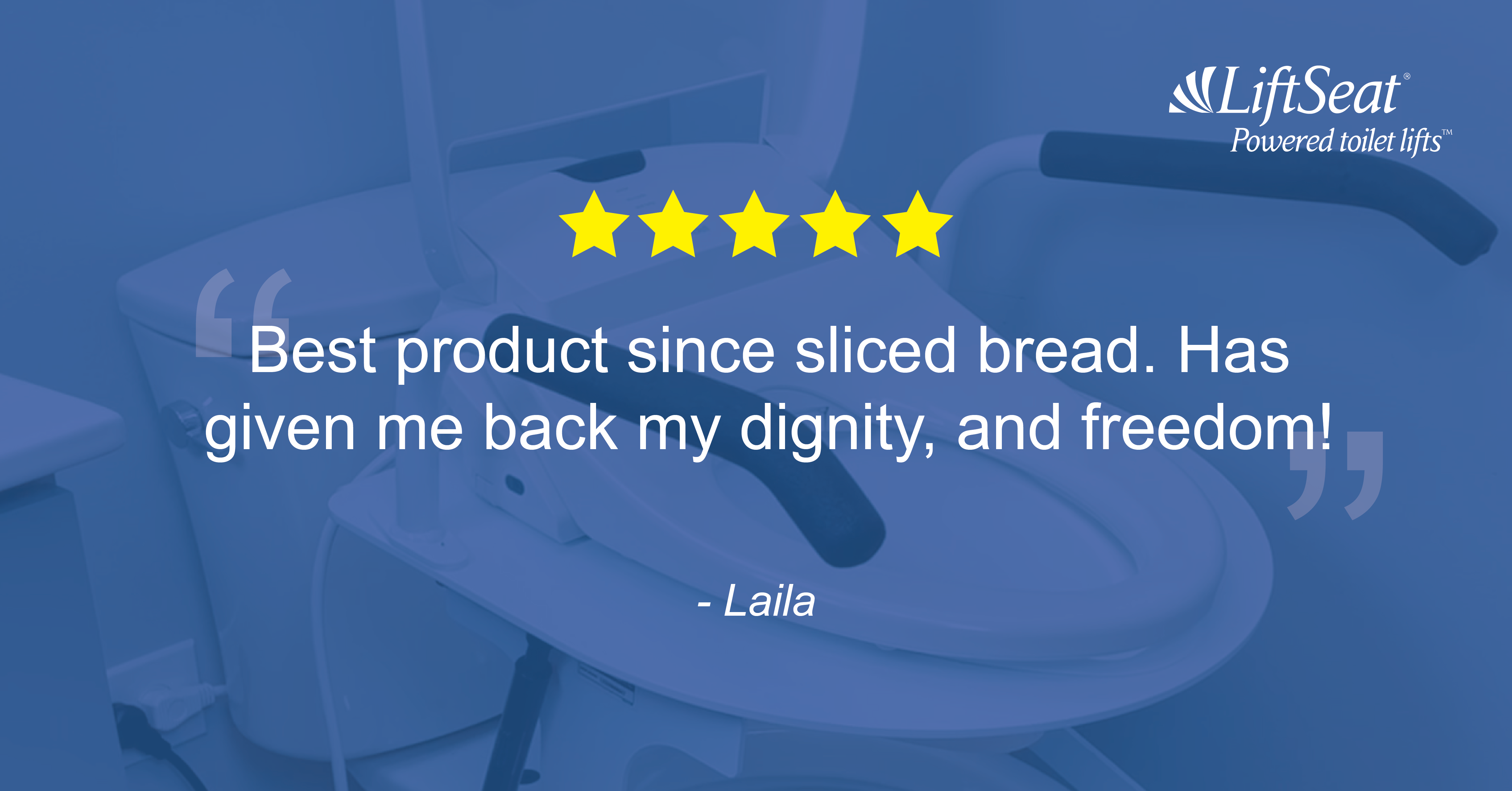
When additional support is needed, a powered toilet lift like LiftSeat can help. LiftSeat gently lowers the user from standing and raises them back up from sitting, following a natural sit-to-stand motion. It fits over your existing toilet without structural modifications and can be easily converted for bedside commode use. It can also be fitted with an optional bidet for hands-free cleaning, along with other accessories to meet individual needs.
One of the biggest benefits of a powered toilet lift is that it requires little to no caregiver assistance. For people whose strength has declined, grab bars and raised seats may still leave them needing help from another person. With LiftSeat, many users can use the toilet completely on their own, preserving both their privacy and independence.
Build a Support Network
Aging in place doesn't mean doing it all alone. Regular check-ins from family, friends, or neighbors make it easier to spot new challenges early, whether that's a change in balance, a missed medication, or a task that's become harder to manage. Caregivers benefit from support too, and there are many reputable free services designed to help both older adults and the people who care for them.
A few good places to start:
- Eldercare Locator: This free public service of the U.S. Administration on Aging connects older adults and families with local services. It's also the easiest way to reach your local Area Agency on Aging.
eldercare.acl.gov
1-800-677-1116
- National Council on Aging: Offers fall-prevention guides and resources related to aging in place.
ncoa.org
- Family Caregiver Alliance: Provides education and support resources for family caregivers.
caregiver.org
Staying Home, Staying Independent
Aging in place isn't about doing everything alone. It's about having the right support in the right places, so you can keep living life on your own terms. A home safety walkthrough, a few thoughtful upgrades, and a strong support network can help make your home the safe, comfortable place you want it to be for years to come.
To learn more about how LiftSeat powered toilet lifts support safe, independent bathroom use, visit liftseat.com.
This content is not intended to be a substitute for professional medical advice, diagnosis, or treatment. Always seek the advice of your physician or other qualified health provider with any questions you may have regarding a medical condition.
References:
- AARP. (2024, December 10). New AARP report: Majority of adults 50-plus want to age in place, but policies and communities must catch up [Press release]. https://www.aarp.org/press/releases/2024-12-10-new-aarp-report-majority-adults-50-plus-age-place-policies-communities-catch-up/
- Centers for Disease Control and Prevention. (n.d.). Facts about falls. U.S. Department of Health and Human Services. https://www.cdc.gov/falls/facts.html
- Dobash, D. S., Haddad, Y. K., Rice, K., & Bergen, G. (2026). Older adult falls as a predictor of nursing facility placement. American Journal of Lifestyle Medicine. Advance online publication. https://doi.org/10.1177/15598276251409755
- Stevens, J. A., Haas, E. N., & Haileyesus, T. (2011). Nonfatal bathroom injuries among persons aged ≥15 years—United States, 2008. Morbidity and Mortality Weekly Report, 60(22), 729–733. https://www.cdc.gov/mmwr/preview/mmwrhtml/mm6022a1.htm