
The Role of LiftSeat Power Toilet Lifts in Assisted Living Facilities
02/12/2026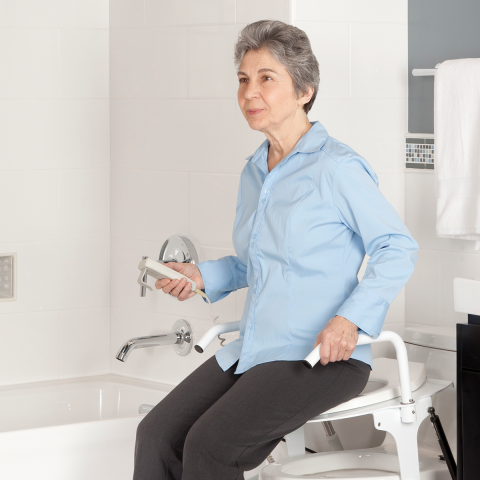
Falls are a leading cause of injury among older adults in assisted living and residential care facilities, with one study finding nearly 1 in 4 residents experienced a fall within a three-month window.1 Many of these incidents occur during toileting - one of the most common and high-risk daily activities.
For residents with limited mobility, rising from or lowering onto a toilet can be challenging and unsafe, while caregivers face significant physical strain when providing assistance. LiftSeat Power Toilet Lifts are designed to address these risks, supporting residents’ independence and safety while reducing physical demands on care teams.
Why Toileting Support Matters
A study of hospitalized adults aged 60 and older found that 14.3% of falls occurred during toileting, often overnight when supervision is limited.2 The authors emphasized that special care should be provided to older adults during toileting to prevent falls and associated injuries, which in this study most often included fractures and head trauma.
Toileting assistance also poses risks for caregivers, with repeated lifting and transfers potentially leading to significant musculoskeletal injuries. An analysis of OSHA logs and incident reports across multiple hospital facilities found that toilet transfer-related injuries account for nearly 10% of total patient-handling injuries.3 These injuries not only affect staff well-being but also carry substantial economic costs, with U.S. healthcare facilities incurring expenses from workers’ compensation claims and lost productivity related to patient-handling injuries.
Enhancing Resident Safety and Independence
Traditional lifting and transfer solutions are often designed for broader mobility needs, but they may not be ideal for routine toileting tasks. Floor lifts and full mechanical transfer systems can be bulky and time-intensive to position. In many cases, they are reserved for residents with more significant mobility impairments.
For residents who retain partial strength but struggle with balance or the sit-to-stand transition, manual assistance is often provided instead. Repeated hands-on lifting during toileting places significant physical demands on caregivers, particularly when assisting with frequent sit-to-stand transfers throughout the day, underscoring the need for more supportive transfer solutions.
LiftSeat Power Toilet Lifts are designed specifically to support safer toileting and transfers without the complexity of larger mechanical lift systems. Installed directly over the existing toilet, LiftSeat provides powered assistance to gently raise and lower residents during the sit-to-stand movement. They can also be easily modified for bedside use, offering flexible support and further helping minimize transfer-related injuries.
This targeted support helps bridge the gap between full manual assistance and bulky transfer equipment. Residents who have some mobility but need added stability can maintain greater independence, while caregivers can focus on supervision and positioning rather than heavy lifting.
Reducing Caregiver Strain
Helping patients on and off the toilet can place significant physical demands on caregivers. Research examining the forces involved in standard toilet transfers found that caregivers exert an average of 46 pounds of force during the process. The study also analyzed the biomechanical stress on different areas of the caregiver’s body, highlighting where strain was concentrated.4
When the same measures were evaluated using a LiftSeat Power Toilet Lift, results showed a notable reduction not only in overall force but also in stress on key areas, particularly spinal compression, highlighting the ergonomic benefits of powered toileting assistance.
Practical Benefits for Care Facilities
LiftSeat Power Toilet Lifts offer tangible advantages for assisted living administrators and care teams, including:
- Enhanced resident safety and satisfaction
Reduces the risk of falls during toileting while supporting greater independence.
- Lower caregiver injury rates
Powered support decreases physical strain and risk of musculoskeletal injuries.
- Operational efficiency
Streamlines daily routines and reduces time spent on physically demanding transfers.
- Long-term cost savings
Fewer injuries and improved workflow help reduce costs over time.
By combining resident safety with caregiver support, LiftSeat Power Toilet Lifts provide measurable benefits that positively impact both quality of care and facility operations.
To learn more about LiftSeat Power Toilet Lifts for healthcare, click here.
References:
- Harris‑Kojetin, L., & Sengupta, M. (2018). Falls among assisted living and residential care community residents: Results from the 2016 National Study of Long‑Term Care Providers. Innovation in Aging, 2(Suppl_1), 766. https://academic.oup.com/innovateage/article/2/suppl_1/766/5171348
- Zou, M., Lu, R., Jiang, Y., Liu, P., Tian, B., Liang, Y., Wang, X., & Jiang, L. (2023). Association between toileting and falls in older adults admitted to the emergency department and hospitalised: a cross-sectional study. BMJ open, 13(6), e065544. https://doi.org/10.1136/bmjopen-2022-065544
- Monaghan, Heather. (2013). Establishing the Link Between Musculoskeletal Injuries to Healthcare Staff when Performing Patient Toilet Transfers and the Associated Cost [White Paper]. LiftSeat Corporation. https://www.liftseat.com/sites/default/files/Clinical%20Library/LiftSeat%20Whitepaper%202013.pdf
- Lloyd, John. (2008). Ergonomic Evaluation of the LiftSeat® Patient Handling Technology to Facilitate Toileting Tasks. LiftSeat Corporation. https://www.liftseat.com/sites/default/files/Clinical%20Library/Ergonomic_Evaluation_of_LiftSeat_Patient_Handling_Technology.pdf
This content is not intended to be a substitute for professional medical advice, diagnosis, or treatment. Always seek the advice of your physician or other qualified health provider with any questions you may have regarding a medical condition.